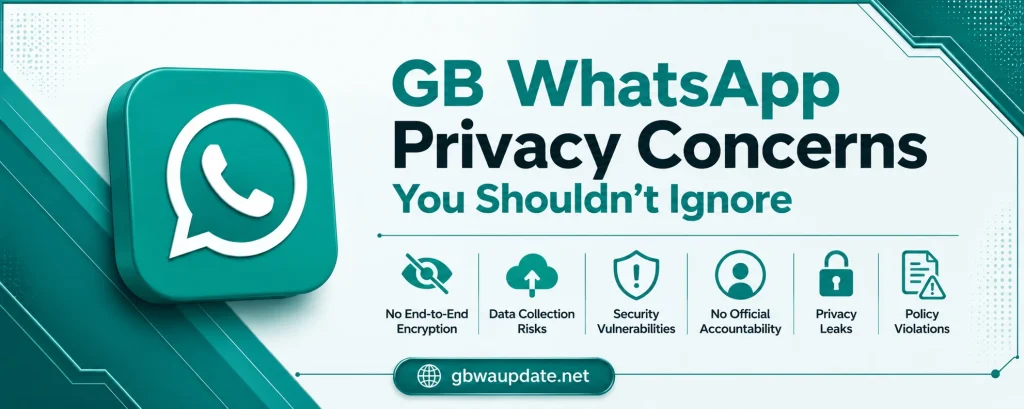
GB WhatsApp Privacy Concerns You Shouldn’t Ignore
Introduction
Privacy is one of the most important considerations when choosing a messaging application. The very nature of messaging — sharing personal thoughts, sensitive information, private media, and intimate conversations — means that the app you use has access to some of your most private data. GB WhatsApp’s privacy implications are serious and multifaceted, and this article from gbwaupdate.net provides a complete understanding of them.
The Privacy Baseline: Why Messaging Apps Matter
Before examining GB WhatsApp specifically, consider what data a messaging app can access:
- Every message you send and receive
- All contacts in your phone’s address book
- Photos, videos, and documents you send or receive
- Voice messages and call audio
- Your location (if shared)
- Your behavioral patterns — when you are active, who you message most frequently, how you respond
This is an extraordinary amount of personal data. The privacy policies and security practices of the app handling this data matter enormously.
Privacy Concern 1: No Accountable Privacy Policy
The official WhatsApp operates under Meta’s privacy policy, which is a legally binding document. Users in various jurisdictions have rights to access, correct, and delete their data. Privacy regulators in the EU, UK, and other regions actively investigate and fine Meta for privacy violations.
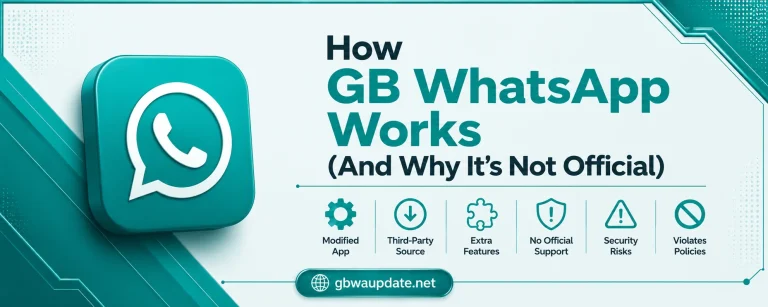
GB WhatsApp has no enforceable privacy policy. Any document you might find online claiming to be a GB WhatsApp privacy policy is written by anonymous individuals with no legal standing. If your data is misused, you have no recourse under consumer protection law, privacy law, or any other legal framework.
Privacy Concern 2: Unknown Data Collection
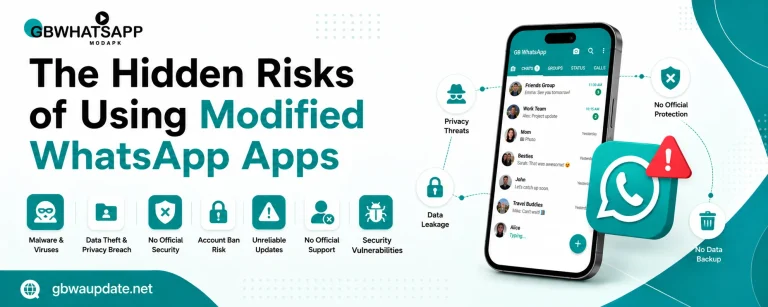
Because GB WhatsApp’s code cannot be independently audited, nobody outside of its developers can know what data it collects. Possible collection activities that cannot be ruled out include:
- Logging message content before or after encryption
- Copying contact information to external servers
- Recording metadata about your communication patterns
- Transmitting your media files to third-party storage
- Collecting device identifiers for tracking purposes
None of these are confirmed activities of GB WhatsApp, but none of them can be denied, either. The absence of transparency is itself the privacy concern.
Privacy Concern 3: Encryption Integrity
The official WhatsApp’s end-to-end encryption, implemented using the Signal Protocol, has been independently verified. The encryption ensures that only the sender and recipient can read message content — not WhatsApp, not Meta, not any third party.
GB WhatsApp claims to maintain this encryption. But a modification to WhatsApp’s code could intercept messages before they are encrypted or after they are decrypted — meaning the encryption exists in form but not in protection. Without code audits, this claim is unverifiable.
Privacy Concern 4: Third-Party Server Exposure
Some features of GB WhatsApp — particularly theme downloads, font packs, and update mechanisms — involve connections to servers that are not WhatsApp’s official infrastructure. These servers are operated by the unknown individuals or groups behind GB WhatsApp. Data transmitted to these servers falls completely outside of any privacy protection.
Privacy Concern 5: Device Permission Exploitation
GB WhatsApp requests the same device permissions as official WhatsApp — contacts, microphone, camera, storage, and so on. The difference is that official WhatsApp’s use of these permissions is governed by its privacy policy. GB WhatsApp’s use of the same permissions is ungoverned and unverifiable.
Privacy Concern 6: The Metadata Problem
Even if message content is protected by encryption, metadata is enormously revealing. Metadata includes who you message, how often, at what times of day, from what locations, and for how long. This information can reveal relationship patterns, work habits, health behaviors, and much more. GB WhatsApp could collect this metadata without ever accessing message content, and users would have no way to know.
Privacy Risks Summary
| Data Type | Official WhatsApp | GB WhatsApp |
|---|---|---|
| Message Content | E2E encrypted, audited | Claimed E2E, unverifiable |
| Contact List | Policy-governed | Unregulated |
| Media Files | Policy-governed | Unregulated |
| Metadata | Policy-governed | Unregulated |
| Behavioral Data | Policy-governed | Unregulated |
| Third-Party Servers | None | Unknown third parties |
Frequently Asked Questions
Q1: Can I verify that GB WhatsApp is not collecting my data? Not without sophisticated network monitoring and code analysis tools beyond the reach of average users. No reliable verification is available.
Q2: Does using a VPN protect my privacy on GB WhatsApp? A VPN protects data in transit between your device and the server it is communicating with. It does not protect against data collection by the app itself.
Q3: If my messages are end-to-end encrypted, does it matter what app I use? Yes. Encryption protects data in transit, but a modified app can potentially access messages on your device before encryption or after decryption, making the encryption moot.
Q4: Can my employer detect that I am using GB WhatsApp on a work device? Enterprise mobile device management systems may detect the installation of unauthorized apps including GB WhatsApp.
Q5: Are there messaging apps with better privacy than even official WhatsApp? Signal is widely recognized as the gold standard for privacy in messaging, offering open-source code that can be independently audited.
Conclusion
The privacy concerns surrounding GB WhatsApp are not hypothetical — they are structural. The absence of accountability, transparency, and code auditability makes GB WhatsApp an inherently privacy-hostile application, regardless of what features it offers. For anyone who values the privacy of their personal communications, gbwaupdate.net recommends steering clear of GB WhatsApp and choosing verified, audited alternatives instead.