Why GB WhatsApp Can Get Your Account Banned
Introduction
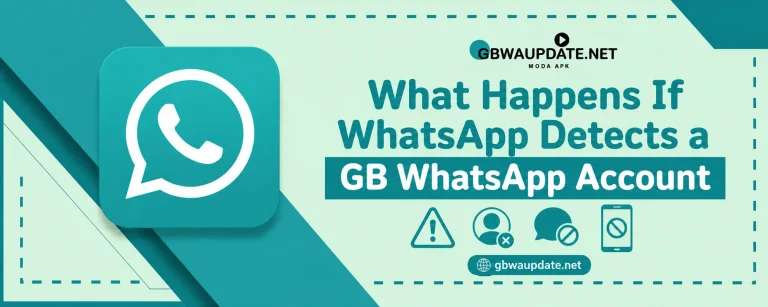
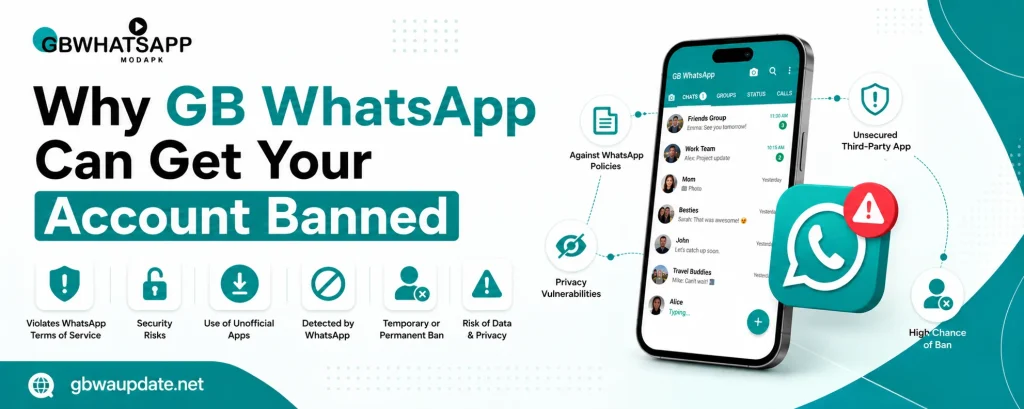
One of the most immediate and consequential risks of using GB WhatsApp is the very real possibility of having your WhatsApp account banned. This is not a rare event or an empty warning. Thousands of users report account bans related to GB WhatsApp use every year, and the mechanisms behind these bans are built into WhatsApp’s core infrastructure.
This article from gbwaupdate.net explains precisely why GB WhatsApp triggers bans, how WhatsApp detects modified clients, and what happens when a ban occurs.
WhatsApp’s Terms of Service and Modified Apps
WhatsApp’s Terms of Service have long included a prohibition against using unofficial, modified, or automated versions of the app. The relevant language makes clear that using any client application not officially developed or authorized by WhatsApp constitutes a violation that can result in account termination.
This policy exists for multiple reasons. Modified apps cannot be audited for security compliance. They can be used to send spam at scale. They can abuse WhatsApp’s infrastructure. And they create an uneven experience that undermines the platform’s integrity. WhatsApp enforces this policy not merely as a legal formality but as an active, ongoing operational priority.
How WhatsApp Detects GB WhatsApp
WhatsApp uses several detection mechanisms to identify accounts using unofficial clients:
Client Signature Verification
Every official WhatsApp installation has a cryptographic signature. When your WhatsApp app communicates with WhatsApp’s servers, it presents this signature. Official installations have signatures from Meta’s verified development certificates. GB WhatsApp, despite efforts by its developers to mimic these signatures, generates different cryptographic identifiers that WhatsApp’s servers can detect.
Behavior Analysis
Modified apps often behave differently from official ones — they send messages at different rates, handle server communication differently, or request data in patterns that official clients do not exhibit. WhatsApp’s server infrastructure analyzes client behavior patterns and flags anomalies associated with known modified clients.
Feature Fingerprinting
Features unique to GB WhatsApp — such as the way it handles message deletion requests or communicates status updates — leave detectable traces in server interactions. These fingerprints help WhatsApp’s systems identify modified client usage even when the client attempts to mask itself.
User Reports
Some bans result from users being reported by their contacts. If multiple contacts report a number for suspicious behavior, WhatsApp may investigate and discover modified client usage in the process.
Types of Bans
WhatsApp issues different categories of bans:
| Ban Type | Duration | Recovery |
|---|---|---|
| Temporary Ban | Hours to days | Usually resolves automatically |
| Extended Temporary Ban | Weeks | May require action via official WhatsApp |
| Permanent Ban | Indefinite | Account deleted, number blocked |
Temporary bans are typically triggered as a warning. Persistent use of modified apps after a temporary ban often escalates to permanent termination.
What Happens During a Ban
When WhatsApp bans an account, the user sees an in-app message indicating that their account has been suspended or terminated. Banned users lose:
- Access to all conversations
- The ability to send or receive messages
- Their WhatsApp profile and profile picture
- Group memberships
- All media stored on WhatsApp’s servers
The phone number associated with the account is also blocked from re-registering on WhatsApp for a period that, in permanent bans, may be indefinite.
The Chat History Problem
An often-overlooked consequence of bans related to GB WhatsApp is the loss of chat history. Because GB WhatsApp stores chats in its own format on the device, and because the app is not official, restoring these chats to official WhatsApp after a ban is unreliable. Users who have important conversations, business records, or media stored exclusively in GB WhatsApp may lose this data permanently.
Can You Appeal a Ban?
WhatsApp provides a limited appeal process through the app itself. However, bans resulting from modified app usage are difficult to successfully appeal. WhatsApp’s systems are designed to detect these violations with high confidence, and appeals that involve modified app usage are rarely reversed.
Frequently Asked Questions
Q1: Can I avoid a ban by using GB WhatsApp carefully? No. The detection mechanisms are automated and based on technical signals rather than user behavior. There is no way to “use carefully” that avoids detection.
Q2: If I switch back to official WhatsApp, will my ban be lifted? Switching apps does not automatically lift an existing ban. If you are temporarily banned, the ban may expire regardless of which app you use. Permanent bans are not resolved by switching apps.
Q3: Will my contacts know why my account was banned? No. They will simply notice that your messages are no longer delivered or that your number is no longer available on WhatsApp.
Q4: Can I create a new WhatsApp account with the same number after a permanent ban? Permanently banned numbers are typically blocked from re-registration for extended periods.
Q5: Does WhatsApp ban GB WhatsApp users in all countries? Yes. WhatsApp’s Terms of Service apply globally, and bans are enforced regardless of geographic location.
Conclusion
The ban risk associated with GB WhatsApp 2026 is real, automated, and increasingly sophisticated. Users who rely on WhatsApp for personal relationships, family communication, or business operations cannot afford to put their account at risk for features that can often be found in safer, legitimate applications. gbwaupdate.net urges readers to consider this risk seriously before installing or continuing to use any modified WhatsApp client.