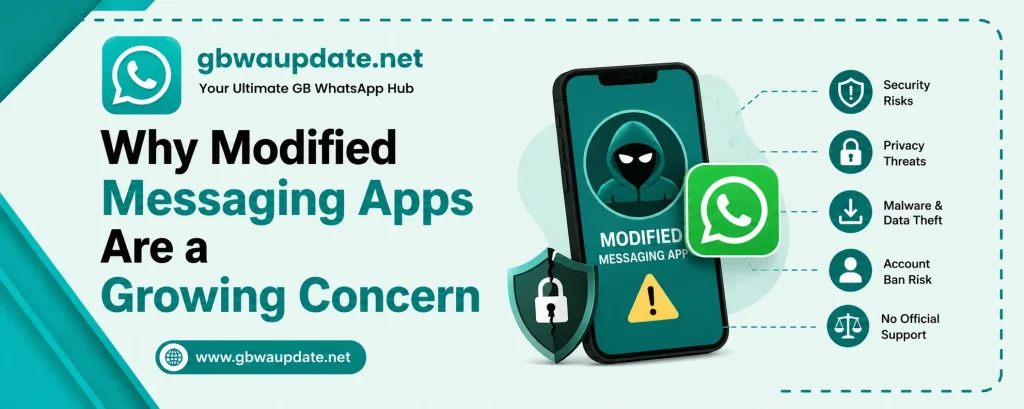
Why Modified Messaging Apps Are a Growing Concern
Introduction
GB WhatsApp APK is part of a broader ecosystem of modified messaging applications — software that takes legitimate, popular apps and alters them for redistribution. This ecosystem has grown significantly in recent years, and the concerns it raises extend beyond any single app. This article from gbwaupdate.net examines why modified messaging apps as a category represent an increasing challenge to digital security, user privacy, and platform integrity.
The Scale of the Problem
Modified messaging apps are not a niche phenomenon. Millions of users worldwide use modified versions of WhatsApp, Telegram, and other popular platforms. The scale of adoption means that the risks associated with these apps are distributed across a massive user base — and that bad actors have strong incentives to target this ecosystem.
When a malicious actor embeds harmful code in a modified app and distributes it to millions of users, the potential impact is enormous. This is not a theoretical concern. There have been documented cases of modified messaging apps being weaponized for surveillance and data theft at scale.
Why Modified Apps Are Attractive to Bad Actors
Modified messaging app distribution is an ideal vector for malicious activity because:
- Users actively seek out modified APKs from unofficial sources, reducing their skepticism about what they are downloading
- The baseline level of trust in the original app’s name carries over to the modified version
- Users have already configured their devices to allow installations from unknown sources
- The apps are granted broad permissions by users who believe they are installing a messaging application
- There is no accountability structure that could detect and remove malicious versions
This combination of factors makes modified app distribution far more effective as a malware vector than random file downloads.
State-Level Concerns
Cybersecurity intelligence organizations have documented cases where state actors have used modified versions of popular messaging apps for targeted surveillance. A modified WhatsApp that appears to function normally while silently forwarding messages to a government server is an extremely effective surveillance tool — and there is no technical obstacle to building such a tool.
While most GB WhatsApp distributions are unlikely to be state surveillance tools, the same distribution infrastructure used for ordinary mods could theoretically be used for such purposes. Users in politically sensitive situations should be particularly aware of this risk.
Platform Integrity Challenges
Modified apps create challenges that extend beyond individual user safety. They affect the integrity of the platforms they modify:
- They can be used to send spam at scale by automating behaviors the official app restricts
- They can inflate user metrics and inflate engagement data
- They can be used for coordinated manipulation of group conversations
- They enable behaviors that violate content policies, making moderation more difficult
WhatsApp’s active enforcement against modified clients is partly a response to these platform-level concerns, not just individual user safety.
The Growing Sophistication of Mods
Early modified apps were often crude and easy to identify. Modern mods like GB WhatsApp are increasingly sophisticated in their efforts to avoid detection, mimic legitimate app signatures, and maintain server connectivity. This sophistication arms race — between mod developers and platform security teams — means that the risks evolve continuously and are never fully resolved.
Why This Concerns the Security Community
| Concern | Details |
|---|---|
| Scale | Millions of affected users create large attack surfaces |
| Trust Exploitation | Users’ trust in original apps reduces vigilance |
| Permission Exploitation | Broad app permissions enable wide data access |
| No Safety Net | No app store review, no publisher accountability |
| Evolving Threats | Mod sophistication increases over time |
| Deniability | Anonymous developers avoid accountability |
Frequently Asked Questions
Q1: Are modified apps only a concern for WhatsApp? No. Modified versions of Telegram, Signal, and other apps also exist and carry similar risks. Fake apps impersonating legitimate messaging services are an even more direct threat.
Q2: Why do app stores not stop modified apps from reaching users? Modified apps bypass app stores by using APK side-loading on Android. The Play Store and App Store review process only protects apps distributed through those channels.
Q3: Can mobile security software protect against modified app risks? To some extent. Modern mobile security software can detect known malicious signatures. However, novel modifications and carefully crafted malware may evade detection.
Q4: Will this problem get worse over time? The ecosystem of modified apps is likely to evolve in parallel with platform security measures. The underlying economic and motivational dynamics that drive mod development are not diminishing.
Q5: What can platforms do to better protect users from modified apps? Platforms can invest in detection systems (as WhatsApp does), user education (explaining the risks), and feature development that reduces the appeal of mods.
Conclusion
Modified messaging apps represent a growing concern that affects not just individual users but the broader digital communication ecosystem. GB WhatsApp is the most prominent example, but it exists within a larger pattern that cybersecurity professionals take seriously. gbwaupdate.net believes that awareness of this broader context helps users understand why the warnings about modified apps are not alarmist but reflect genuine, documented, and evolving risks.